
Address: International House, 12 Constance Street
London, England, E16 2DQ
United Kingdom
WhatsApp: https://wa.me/447520693725
Email: info@socialrez.com

COPYRIGHT © 2015 - 2026 BY SOCIALREZ ( NEXTZEN IT LTD ) . ALL RIGHTS RESERVED.

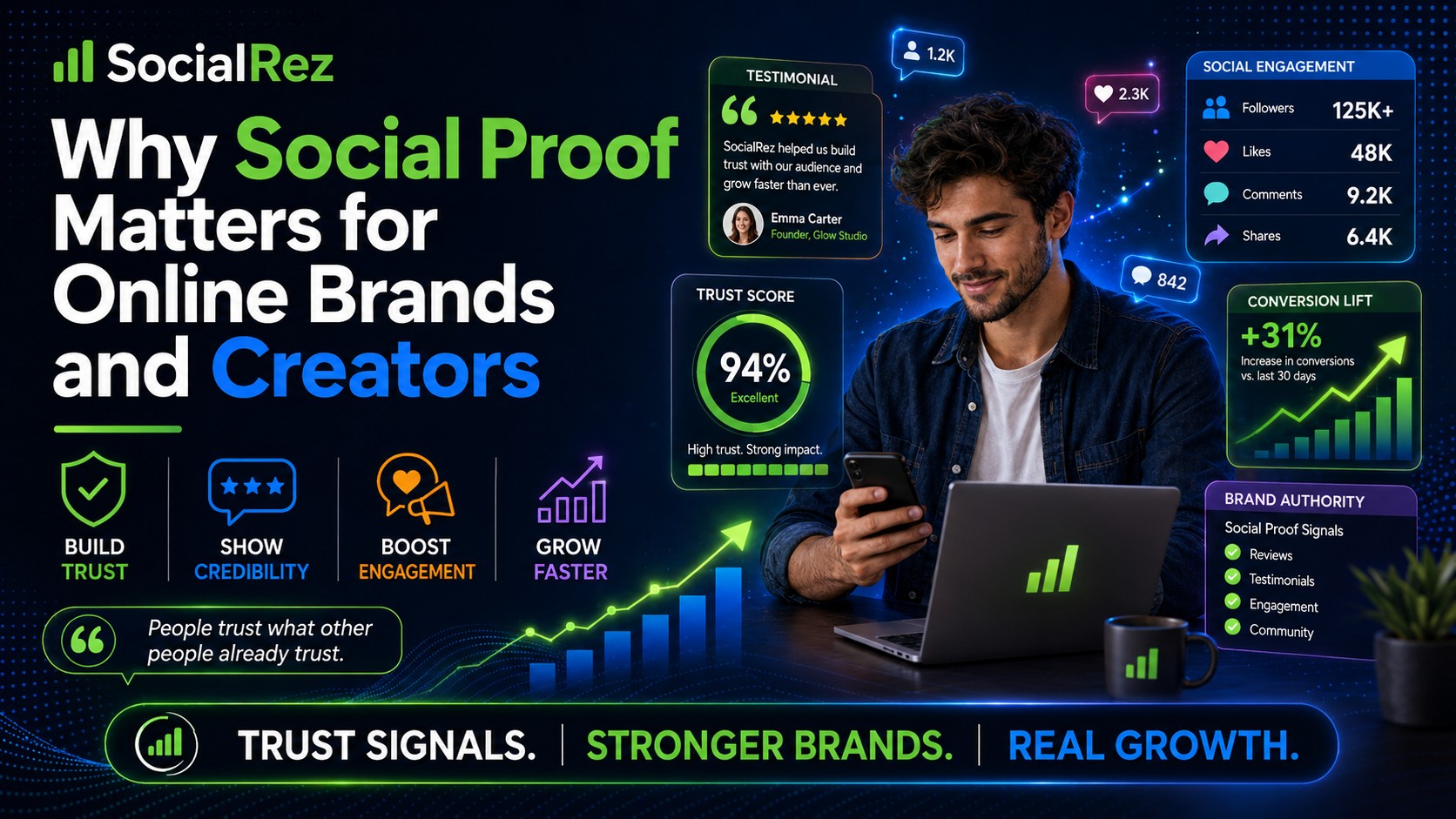
In today’s digital environment, people make quick decisions. Before purchasing, following, booking, or trusting a brand, they often seek evidence that others already trust it.
Social proof is especially influential in these situations.
Social proof means people are more likely to trust something when they see others engaging, recommending, reviewing, or supporting it. For online brands and creators, social proof shapes first impressions, builds credibility, and converts visitors into followers, customers, or loyal fans.
Social proof is essential for growth, whether you are building an eCommerce brand, personal brand, music profile, YouTube channel, Instagram page, LinkedIn presence, or service-based business.
Social proof signals that your brand, content, or service is already valued by others.
Online social proof can appear in many forms, including:
These signals increase confidence that your brand or content deserves attention.
The internet is crowded, with new brands, creators, and businesses emerging daily. As a result, people are selective about whom they trust.
A website, profile, or product page without engagement appears less convincing. In contrast, strong reviews, active followers, visible engagement, and positive feedback make a brand look more reliable.
Social proof matters because it helps answer an important question: “Can I trust this brand or creator?” If the answer is yes, people are more likely to act.
Trust is essential for online success. Without it, people hesitate, leave your website, ignore your profile, or choose a competitor.
Social proof reduces doubt. When potential customers or followers see others have engaged with your brand, they feel more comfortable.
For example:
People trust others, making social proof highly valuable.
First impressions matter online. A visitor may decide within seconds whether to stay on your page or leave.
If your profile or website appears empty or inactive, visitors may quickly lose interest. Visible activity, reviews, followers, comments, or engagement encourage visitors to take you seriously.
For brands and creators, social proof can make your online presence look:
A strong first impression increases the likelihood that visitors will follow, subscribe, click, message, or purchase.
Social proof not only enhances your brand’s appearance but also improves conversion rates.
Conversions can mean different things depending on your goal. It may be a product sale, contact form submission, email signup, profile follow, video view, booking request, or music stream.
When people see evidence that others trust you, they are more likely to act.
Examples include:
Social proof builds confidence before people make decisions.
Authority is vital for long-term growth. Brands or creators with authority are viewed as experienced, trusted, and worth following.
Social proof helps establish authority over time.
For example, a creator with consistent engagement may be seen as influential in their niche. A business with strong customer feedback may be seen as reliable. A professional with LinkedIn recommendations may appear more experienced and trustworthy.
Authority can help you:
The more trust signals you display, the easier it is for people to believe in your brand.
Social proof is especially important for creators. People are more likely to follow content that appears active, popular, or engaging.
Videos with views, likes, and comments attract more viewers. Social media profiles with followers and engagement encourage visitors to follow. Musicians with streams and listeners are more likely to gain new fans.
Creators can use social proof to grow on platforms such as:
Social proof enhances creators’ credibility and encourages greater engagement with their content.
Online competition is intense, with many businesses offering similar products or services. Social proof helps your brand stand out.
If two brands offer similar products, people often choose the one that looks more trustworthy. Reviews, testimonials, ratings, followers, and engagement can influence that decision.
For example, an e-commerce store with product reviews may appear more reliable than one without. A service provider with client testimonials may look more professional than one with no proof of past work.
Social proof provides a compelling reason for people to choose your brand over others.
Different types of social proof serve different goals. The most effective strategy is to combine multiple trust signals.
Reviews are a common form of social proof, helping potential buyers understand other customers’ experiences.
Positive reviews build trust and drive sales.
Testimonials benefit service providers, agencies, consultants, coaches, and freelancers by demonstrating real client success.
Effective testimonials are specific and reference results, experience, or satisfaction.
Likes, comments, shares, views, and followers can make your social media presence look more active and trustworthy.
Strong engagement can help attract more organic attention.
Mentions from influencers or known personalities increase credibility and expand reach.
This approach is particularly effective for fashion, beauty, music, fitness, tech, and lifestyle brands.
Case studies demonstrate real results and are especially valuable for B2B brands, agencies, and service providers.
A case study should outline the problem, solution, and outcome.
User-generated content, such as customer photos, videos, reviews, tags, and posts, feels authentic because it originates from real users.
Features on blogs, news websites, podcasts, or industry platforms enhance brand authority.
Press mentions help position your brand as more established.
Building social proof should be integrated into your long-term marketing strategy and appear natural, relevant, and consistent.
Here are some practical ways to build social proof:
Your goal is to demonstrate that your brand is active, trusted, and valuable.
Social proof is powerful, but must be used carefully. Poor-quality or irrelevant trust signals can harm your brand rather than help it.
Avoid these mistakes:
Effective social proof strengthens your brand reputation rather than weakens it.
SocialRez supports online brands, creators, musicians, professionals, and businesses in enhancing their digital presence through social media and engagement-focused services.
Whether you aim to strengthen your social media profile, improve brand visibility, increase engagement, or build a credible online presence, SocialRez offers services tailored to support your growth.
Social proof helps your brand appear more active, trusted, and professional. With the right strategy, it enhances visibility, credibility, and opportunities.
Social proof matters because people trust what others already trust. In a crowded online environment, brands and creators need more than quality content or products; they need visible credibility.
Reviews, testimonials, followers, engagement, recommendations, streams, and user feedback can all help build trust with new visitors.
For online brands and creators, social proof can improve first impressions, increase conversions, support authority, and encourage long-term growth.
To build a stronger online presence, begin by improving your trust signals. Demonstrate to your audience that others already value your brand, content, or service. looking popular. It is about building confidence, credibility, and trust.
Address: International House, 12 Constance Street
London, England, E16 2DQ
United Kingdom
WhatsApp: https://wa.me/447520693725
Email: info@socialrez.com
COPYRIGHT © 2015 - 2026 BY SOCIALREZ ( NEXTZEN IT LTD ) . ALL RIGHTS RESERVED.
You must be logged in to post a comment.